

When you run ads on Facebook or Instagram, most people focus on the creative. The visuals. The copy. The hook. The offer.
Written by:
Ash Jokio
Share on:


But one of the most important decisions is often ignored: Where should your ad send people?
Your ad destination matters just as much as your ad itself. It decides how easy it is for someone to become your customer. It decides how much trust they feel. It decides how fast they take action. And it directly affects your cost, your conversion rate, and your results.
In simple terms, there are two main destinations:
- Your website
- Your DMs (Direct Messages on Instagram, Facebook or WhatsApp)
Both can work. Both can fail. The key is knowing when to use which.
Why Ad Destination Matters
People scroll through Facebook and Instagram fast. Really fast. They are not sitting down to “analyze” your ad or carefully explore your business. They are killing time, watching reels, replying to friends, or looking for quick inspiration. Your ad gets only a few seconds of attention. If the next step feels even slightly confusing, slow, or effort-heavy, they leave.
This is where most business owners make a wrong assumption. They think everyone who clicks their ad is highly serious, highly motivated, and ready to go through a long journey. In reality, most people are interested, not committed. They don’t have the patience for difficult forms, multiple pages, slow websites, or unclear instructions. They want the easiest possible way to move forward.
Another common mistake is treating a website and a landing page as the same thing. They are not, a website is for exploring, a landing page is for converting.
An ad destination is not supposed to explain everything about your business. Its job is to make the user take one action as fast as possible. Ideally, that action should happen in under 10 seconds:
- Submit a form
- Book a call
- Send a DM
- Make a purchase
In ads, the winner is not the business with the most information, the winner is the one that makes action feel the easiest.
Think about your own behavior. How many times have you:
- Liked a product
- Found a service interesting
- Considered booking something
But didn’t… because:
- The page took too long to load
- You had to click too many times
- You couldn’t find the price
- The form was too long
- The process felt tiring
That’s exactly how your audience feels too.
Your ad destination should feel like a smooth step forward, not a task. Think of your ad as a road sign. It grabs attention and points people somewhere. If that “somewhere” is confusing, slow, or overwhelming, people turn back. If it feels easy, natural, and safe, they continue.
Your destination should:
- Match your business type
- Match your customer’s mindset
- Make the next step obvious
- Help users take action without thinking
- Reduce effort, not increase it
You are not just choosing a link. you are designing how easy it is for someone to become your customer.
When Your Ad Should Go to a Website
A website is the best destination when your business is built around structure and clarity. If your offer is well-defined, the pricing and a lead collection form is visible, your customer doesn’t need a conversation before buying, a website becomes your strongest conversion tool. It allows people to take action instantly, without waiting for replies or explanations. This is especially powerful when you want automation and scale, because your website can sell for you even when you’re offline.
A website works best when:
- Your offer is structured
- Your pricing is clear
- You want scale and automation
- You want people to take action without human involvement
Websites are strong because they remove dependency on manual effort. They give your brand a professional presence and create a predictable customer journey from click to conversion.
They are powerful because they:
- Work 24/7
- Build credibility
- Handle multiple visitors at once
- Track performance easily
- Convert without you being online
When Your Ad Should Go to DMs
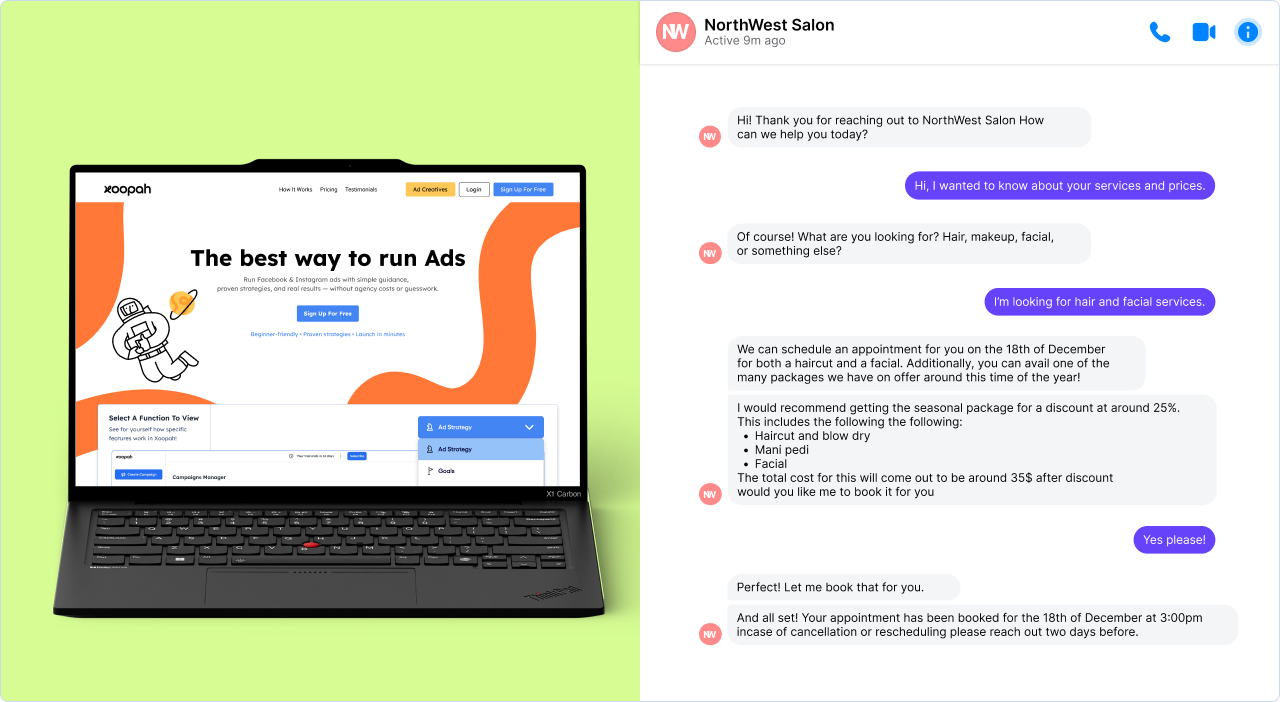
DMs are the right destination when your business depends on trust, conversation, and personal connection. If your offer needs explanation, your pricing changes based on the client, or your customers usually have questions before buying, DMs create a smoother and more natural path to conversion. Instead of pushing people to decide immediately, you give them space to talk, understand, and feel confident.
DMs work best when:
- Your business is relationship-driven
- Your offer needs explanation
- Your pricing is flexible
- You want conversation before conversion
DMs are powerful because they match how people already behave on social media. They don’t feel like a sales page; they feel like a chat. This lowers resistance and makes your brand feel approachable.
They work because:
- They feel personal
- They feel low-pressure
- They remove the need for form-filling
- They feel natural on social platforms
Businesses That Should Prefer DMs
DMs are especially powerful for businesses where trust and customization matter more than speed. These are usually service-based or people-centric brands where buying is emotional, not just logical.
They work best for:
Service-based businesses
- Salons, clinics, consultants, coaches, fitness trainers, and tutors thrive in DMs because clients often need reassurance before committing.
Local businesses
- Car washes, photographers, makeup artists, gyms, and studios benefit from quick, personal replies that lead directly to bookings.
High-ticket offers
- When customers are spending more, they need clarity and trust before making a decision. DMs allow you to build that.
Custom solutions
- If your pricing or packages change per client, a website can feel limiting. DMs allow flexibility and personalization.
Early-stage brands
- When you’re still learning about your audience, DMs help you understand real objections, questions, and buying behavior.
DMs turn your ads into conversations. And conversations, when handled well, turn into trust.
The Smartest Strategy: Use Both
Most successful businesses don’t choose one destination and stick to it forever. They use both websites and DMs, depending on where their audience is in the buying journey. Different people need different experiences. Some need conversation and trust first. Others are ready to take action immediately.
You can structure your strategy like this:
- Cold audience → DMs
- Warm audience → Website
- Retargeting → Website
- New launches → DMs
- Discounts and offers → Website
DMs warm people up, websites close them faster. When you combine both, your ads feel more natural and your funnel becomes stronger.
Still not sure? No worries. Most businesses don’t figure this out upfront. They learn by testing both and seeing what actually works for their industry and specific business. Just don’t make the common mistake of testing for only 2–3 days like many small businesses do. Give each channel a fair run—at least 7–10 days —before drawing conclusions. Try Xoopah and let us handle the hard part for you.
Final Thoughts
Your ad doesn’t stop at the click. It stops when someone becomes your customer. Whether you send people to your website or your DMs, the goal is always the same: make the next step feel easy, natural, and safe. Ads don’t fail because people don’t click, they fail because the destination doesn’t guide people forward.


